
PVC vs Resin Figurines: Which Material Is Right for You?
PVC vs Resin Figurines: What’s the Difference?
PVC and resin figurines are manufactured from entirely different raw materials and production workflows. PVC (Polyvinyl Chloride) is a thermoplastic material, shaped by heat‑assisted injection into steel molds. Resin (polyurethane / epoxy resin) belongs to thermoset materials, poured and cured inside silicone molds under room‑temperature conditions.
These distinct manufacturing approaches create two unique categories of collectible figures, each with its own set of strengths. PVC is the go‑to material for mass‑market production: tough, lightweight and cost‑efficient. Resin serves as a premium option for high‑end statues, featuring substantial weight, ultra‑fine detailing, and higher price points.
Quick reference guide:
- Pick PVC if you plan to manufacture 5,000 units of custom anime figurines for retail sales.
- Pick Resin if you are creating a limited‑run of 200‑piece 1/4‑scale collector statues.
Read further to understand the core reasoning behind these choices.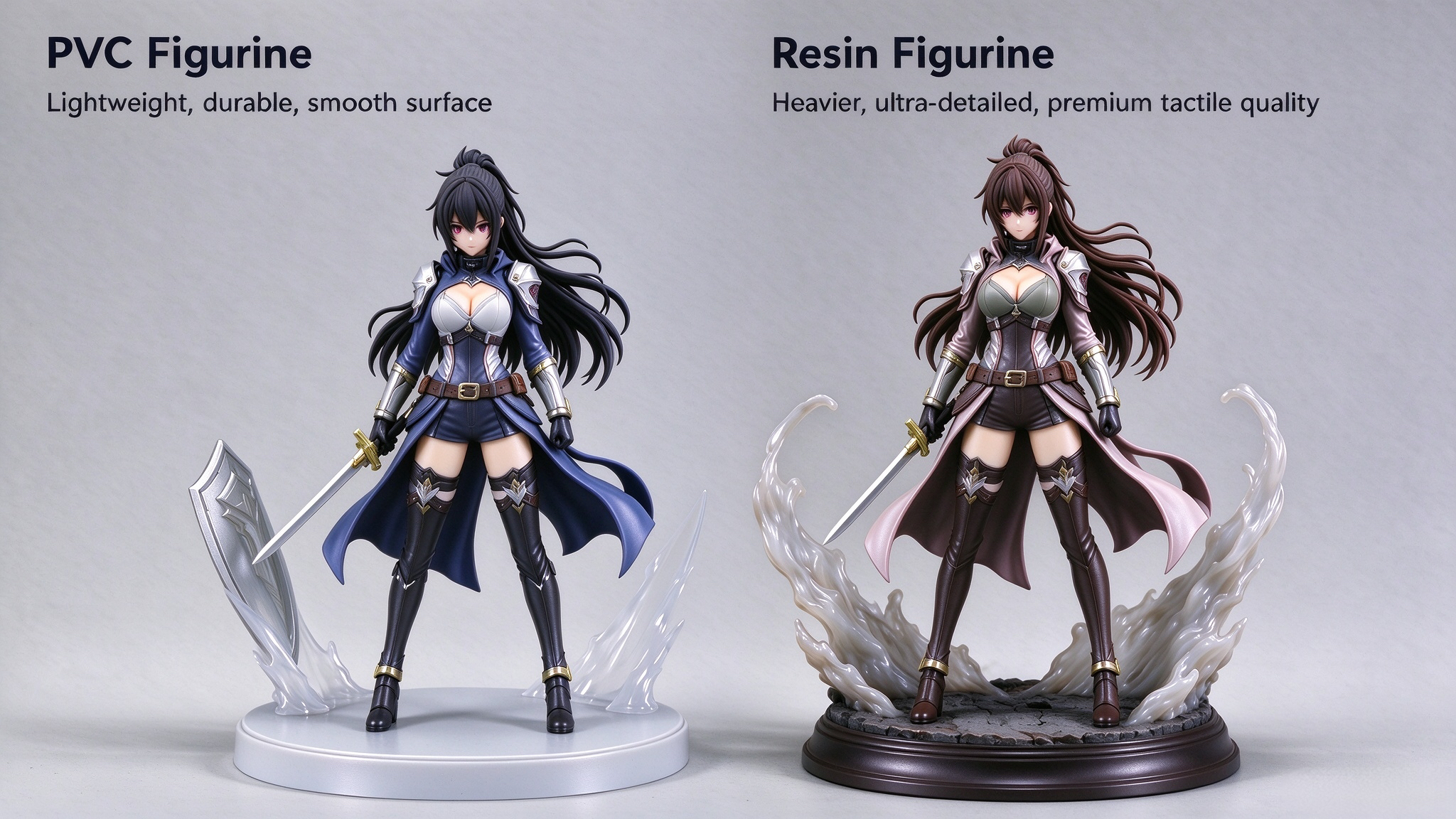
Left: PVC figurine — lightweight, durable, smooth surface.
Right: Resin figurine — heavier, ultra‑detailed, premium tactile quality.
PVC vs Resin: Material Properties Compared
| Property | PVC | Resin (Polyurethane) |
|---|---|---|
| Durability | High — flexible, impact-resistant | Low — rigid, brittle, chips easily |
| Detail level | Good (sharp edges, fine textures) | Excellent (highest resolution) |
| Weight | Light (100–200g for 6-inch figure) | Heavy (300–600g for 6-inch figure) |
| Mold cost | USD 3,000–15,000 (steel) | USD 200–1,000 (silicone) |
| Mold lifespan | 100,000+ cycles | 20–50 casts |
| Per-unit cost (at 500 pcs) | USD 2–5 | USD 8–20 |
| Best volume range | 500–100,000+ pieces | 50–500 pieces |
| Best for | Retail figures, children's toys | Premium statues, limited editions |
Which Is More Durable?
PVC is significantly more durable. As a thermoplastic, it possesses moderate flexibility and can withstand impacts without cracking. Dropped onto hard flooring, a PVC figure will often bounce. A resin figure by contrast will chip, crack or even shatter on impact.
This explains why PVC dominates children’s toys and mass‑retail collectibles. Resin figurines are intended purely for static shelf display; they are for viewing rather than frequent handling. For cross‑border shipping, PVC holds up far better in transit. Resin items require heavy foam‑reinforced packaging, yet still carry notable risk of damage during delivery.
Which Has Better Detail?
Resin achieves superior detail resolution. Silicone casting molds capture surface micro‑textures better than steel injection molds for PVC. If your artwork includes ultra‑fine features such as skin pores, woven fabric texture or individual hair strands, resin will render those nuances more faithfully.
That being said, PVC still delivers more than sufficient detail for most collectible products. Our in‑house PVC art figurines achieve sharp edges, clean paint lines and intricate surface textures that satisfy even demanding collectors. The detail gap only becomes critical for large‑format premium statues at 1/4 scale and above.
Why Are Resin Figures More Expensive?
Four key factors push up resin unit costs:
- Frequent mold replacement Silicone molds degrade after just 20‑50 casts. Steel injection molds for PVC support upwards of 100,000 shots. A 500‑piece resin production may need 10‑25 separate mold sets, while one single steel mold completes the full 500‑piece PVC order.
- Higher raw‑material expense Polyurethane resin costs 3‑5 times more per kilogram than PVC compound.
- Slow production throughput Each resin casting requires 30‑60 minutes including full curing. A PVC injection molding cycle takes merely 15‑45 seconds. PVC factories output hundreds of finished parts daily; resin workshops produce only dozens.
- Small‑batch cost amortization Resin is mostly produced as limited runs of 50‑500 units. Fixed costs for sculpting, mold development and setup are spread across fewer finished goods, raising per‑item expense.
When Should You Choose PVC?
- Your project requires mass‑scale manufacturing (500 pieces or more)
- Products will be handled by children or shipped internationally
- You need competitive unit pricing for retail markets
- Your design calls for solid detail, yet does not demand extreme micro‑textures
- Lightweight figures are preferred for blind‑box lines or collectible series
When Should You Choose Resin?
- You are producing limited‑edition goods (50‑500 pieces total)
- You are making premium large‑scale statues (1/4 scale or bigger) where maximum detail is essential
- Your target buyers value substantial weight and luxury feel
- Your design incorporates ultra‑fine surface textures that PVC cannot fully replicate
- You can accept higher unit pricing for a premium‑grade collectible
Unsure which material fits your project? Our Shenzhen factory manufactures both PVC and resin figurines. Share your design files with us, and we will recommend the optimal material based on your production volume, detail requirements and budget.
Get a free quote: WhatsApp: +86 135 4412 7654 Email: info@demengtoy.com
快速导航
联系我们

关注我们

