
How Are Anime Figures Made?
Demeng Toy is a professional anime figure manufacturer with more than ten years of custom figurine production experience, specializing in highly detailed scaled anime character models. Custom anime figure creation is an intricate, labor-intensive craft. Every exquisite finished figure comes from elaborate workflows and careful handwork. Below is a full breakdown of our anime figure production process at Demeng Toy, using painted PVC finished figures as our standard example. We welcome any professional feedback and revisions.
The entire manufacturing workflow of anime figures falls into four core stages: prototype development, mold making, painting and assembly, and packaging and transportation. Among them, prototype development is the most time-consuming and pivotal procedure, as the prototype’s precision and quality fundamentally determine the final product’s effect. The finalized uncolored prototype is known as a grey master prototype. This master prototype is used to create molds, and cast resin kits from such masters are widely known as GK (Garage Kit), often displayed at anime exhibitions and fan conventions.
1. Prototype Development
Before 3D printing became widely available, all prototypes were hand-sculpted by professional sculptors. Following official character design references, sculptors turn 2D anime artwork into tangible 3D models with various sculpting materials: modeling clay, AB putty, body filler and lightweight air-dry clay. This work is essentially high-level miniature handcrafting.
Sculptors first shape the overall silhouette, body proportion and basic pose of the anime character, then polish every fine detail meticulously, covering facial expressions, dynamic poses, costume textures and accessory details. During this stage, maintaining harmonious body proportions and restoring the original character’s charm are top priorities. Any distortion or detail deficiency will make the figure lose its appeal and fail to resonate with anime fans.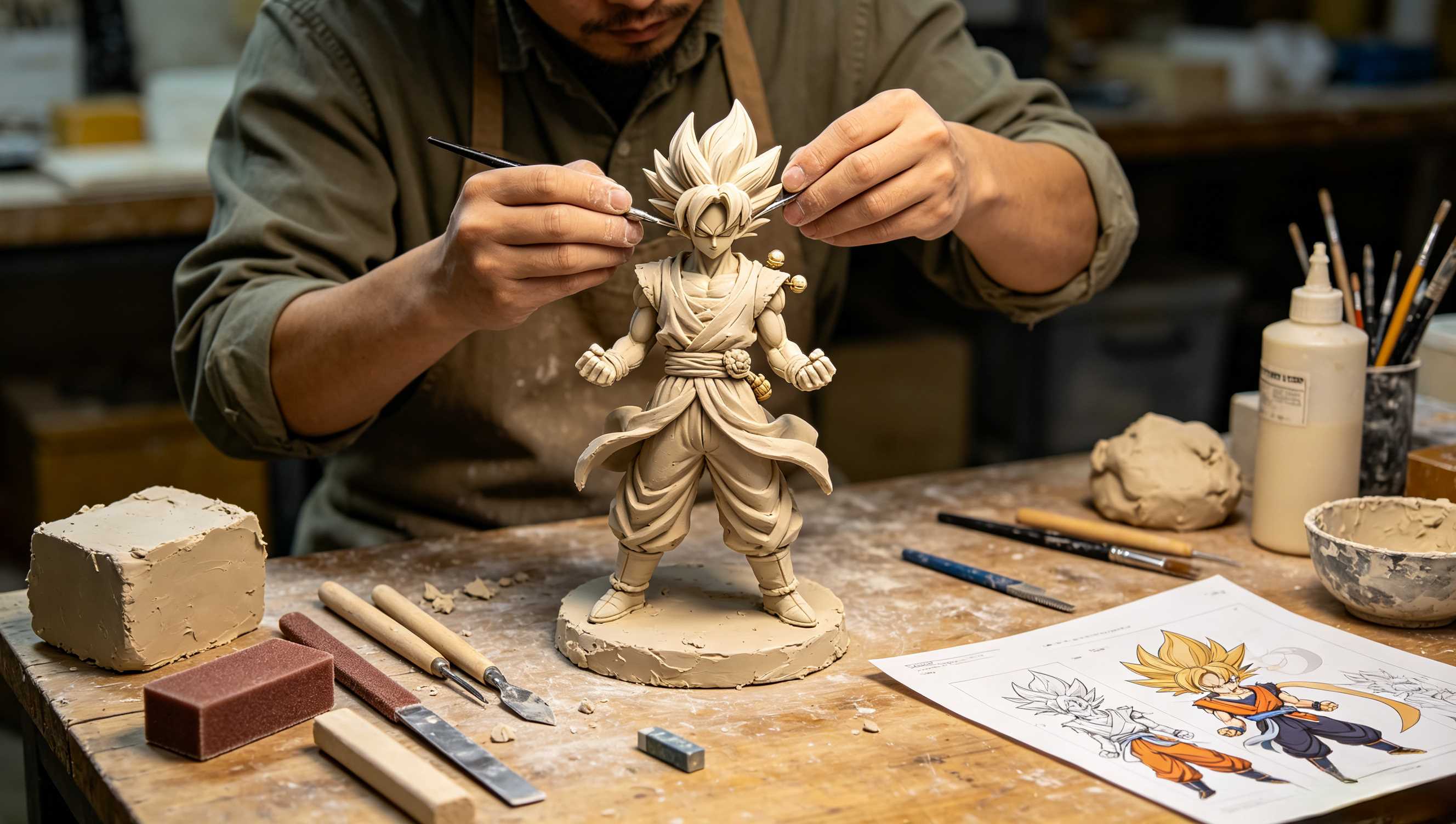
Thanks to the rapid advancement of 3D modeling and printing technology, modern prototype development has been greatly optimized and streamlined. Today, 3D modelers build precise digital character models via professional modeling software, then produce physical prototypes with high-precision 3D printers, greatly improving accuracy and efficiency.
Once the initial prototype is finished, it undergoes multiple rounds of fine polishing, surface cleaning, priming and defect repair. A grey primer coat is sprayed to reveal tiny imperfections for targeted fixes, resulting in the standard grey master prototype. The complete master prototype is then split into separate parts for subsequent mass production.
2. Mold Making
Taking PVC anime figures as the primary example (products of other materials follow similar molding workflows), formal mold fabrication is done from the disassembled prototype parts. Molds are essential for mass production. Pure hand sculpting cannot satisfy large market orders and comes with prohibitive production costs.
Two main mold types are used for anime figure manufacturing: silicone molds and steel molds, each with unique pros and cons. It is important to note that mold fabrication causes irreversible damage to the master prototype, leaving it unusable once molds are made. This makes mold selection a critical decision in production planning.
Silicone molds have low upfront costs but a short service life. Subject to wear with every casting cycle, a silicone mold for high-detail parts can typically only be reused around 10 times, so one master prototype yields roughly 10 finished resin copies. Steel molds, by contrast, support repeated high-precision injection molding and suit mass-batch production. Yet their high tooling cost makes them uneconomical for small orders.
3. Painting and Assembly
After injection molding using precision steel molds, a full set of split figure parts is produced. All parts require secondary fine finishing. Specifically, injection-molded parts often carry faint mold lines on the surface, which must be manually sanded to deliver a smooth, blemish-free final surface.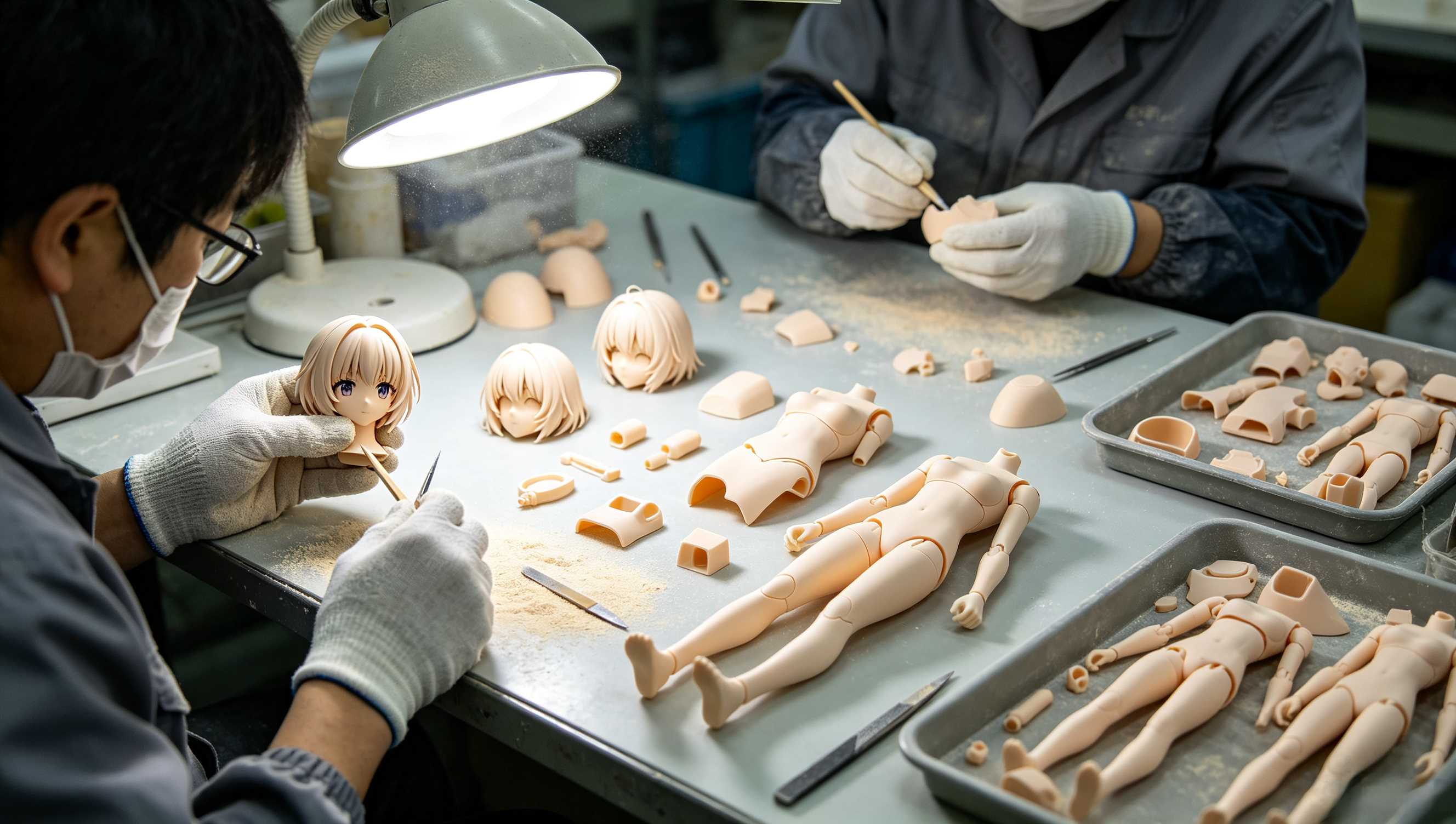
Sanded parts then move to painting. Large solid-color areas are mostly sprayed by automated equipment for consistent color output, while fine details, edge lines and small decorative elements are hand-painted by skilled painters to recreate layered textures and subtle color gradients.
Once painted parts are fully cured and pass inspection, all separate components are assembled following strict assembly specifications to complete the finished anime figure.
4. Packaging and Transportation
Standard anime figure packaging uses a two-layer structure: inner packaging and outer carton. Custom foam inserts or PVC blister trays are used on the inside to hold the figure securely, protecting it from compression, impact and damage during shipment. The outer box is custom color printed, printed with full product specs, character info and brand details. Most outer cartons feature a clear display window, letting buyers view the figure’s overall shape and fine details without opening the box and improving the retail presentation.
快速导航
联系我们

关注我们

